
It’s a difficult dilemma.
On one hand, every diver dreams of the next dive. That excitement when booking your tickets, getting your gear ready, and finally making the trip to venture off into the deep blue. On the other hand, our being in the ocean just adds to its degradation. Carbon emissions from planes, diesel fuel from dive boats, damaging corals, poisonous sunscreen, plastic pollution, and more – all courtesy of ocean tourism.
So, what do we do?
The Blue Economy
The Blue Economy refers to the use of the ocean, sea, and coast for economic growth, while preserving the health of natural ecosystems. When done well, it should maintain a balance of economic, social, and environmental pillars and takes into consideration industries like fisheries, tourism, renewable energy, and transport.
Blue Tourism
Tourism accounts for a huge portion of the blue economy.
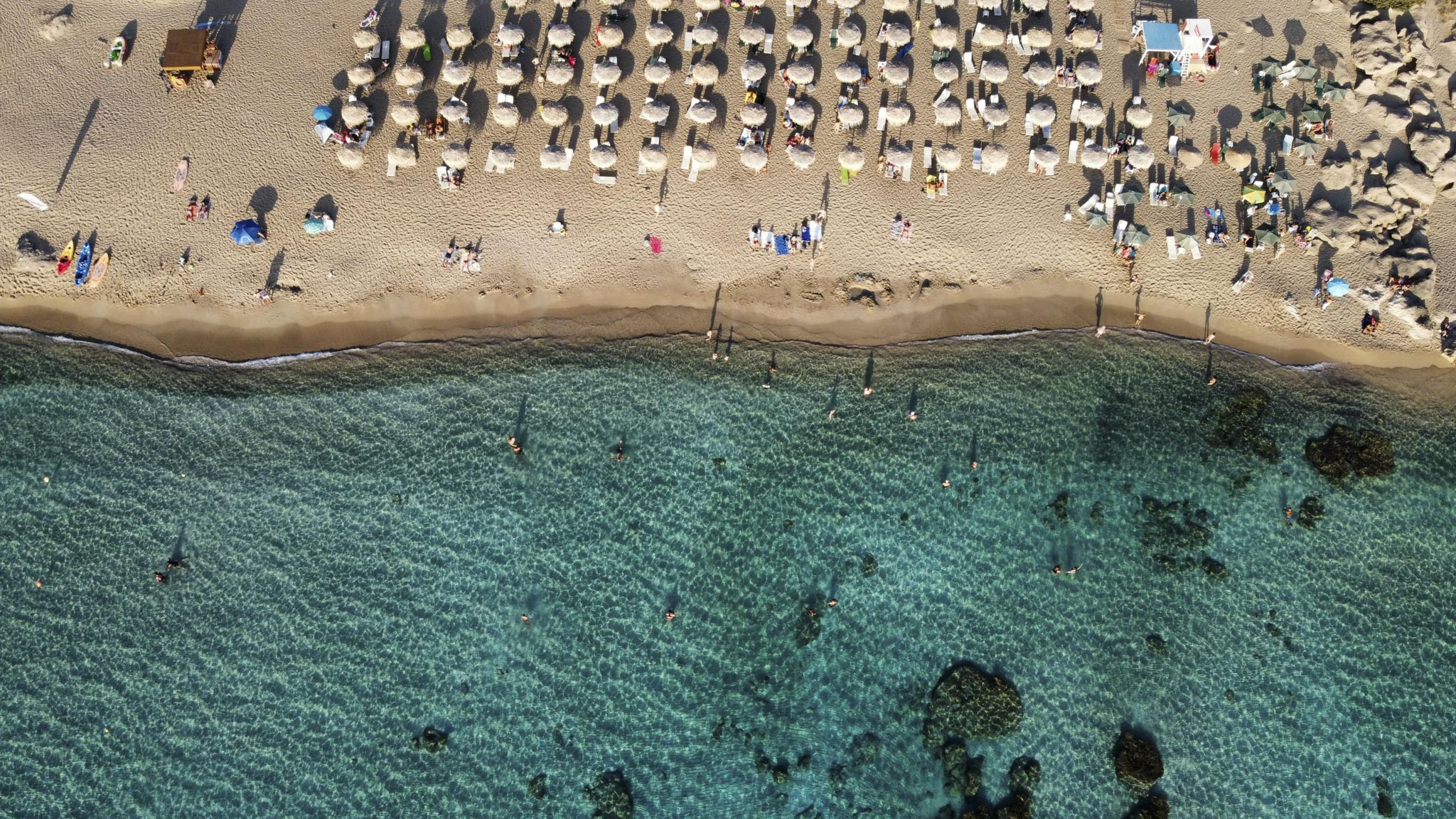
Coastal tourism refers to land-based activities that occur along coastlines. These include the building of infrastructure such as hotels, resorts, restaurants, bars, and also beach recreation, like swimming and sunbathing.
In 2025, coastal tourism accounted for 50% of all worldwide travel and tourism and generated $1.5 trillion in revenue. In many countries, coastal tourism drives the entire economy.
Ocean or marine tourism refers to the activities that occur in the sea such as cruising, sailing, and diving.

The Hidden Cost of Showing Up
And this is where it gets uncomfortable.
Because the very thing that draws us to the ocean – its beauty, its biodiversity, its sense of peace – is the same thing we slowly erode by showing up in the way we currently do.
Dive boats anchor on fragile reefs. Beginner divers kick corals without meaning to. Sunscreen washes off our skin and into ecosystems that have no defence against it. Even the presence of too many people in one place changes animal behaviour. And above it all, there’s the invisible layer: flights, fuel, infrastructure, supply chains. The footprint we don’t see but are very much a part of.
Yet, tourism is also what funds conservation in many parts of the world.
Marine parks, reef restoration projects, local livelihoods – they often depend on visitors. Remove tourism entirely, and you don’t necessarily get protection. Sometimes, you get exploitation of a different kind. Fishing pressure increases. Coastal development goes unchecked. Communities lose income and turn to whatever is available.

The Illusion of Balance
So, again … what do we do?
There isn’t a clean answer.
The Blue Economy, in theory, offers a middle path. Use the ocean, but don’t destroy it. Grow economically, but not at the cost of ecosystems. It sounds good. It reads well in reports. But in reality, it’s messy. Because “balance” is not a fixed point – it’s a constant negotiation between profit, people, and planet.
And right now, if we’re honest, the scales are still tipped.
Maybe the question isn’t whether we should engage with ocean tourism at all, but how we do it, and how much is too much.
Do we choose operators that prioritise reef-safe practices, even if they cost more?
Do we dive less, but with more awareness?
Do we question the need to fly across the world for a single experience?
Do we support places that are actively trying to regenerate, not just sustain?
And beyond individual choices, do we start asking harder questions of the industry itself?
Because the Blue Economy cannot just be another label we hide behind while continuing business as usual. It has to mean something. It has to require trade-offs. It has to challenge growth for the sake of growth.

Leave Only Bubbles?
Divers are often told to “take only memories, leave only bubbles.” It’s a beautiful idea. But even our bubbles aren’t neutral, they come with everything it took to get us there.
So maybe the point isn’t perfection.
Maybe it’s honesty.
And maybe it’s this: if we’re going to enter the ocean, we need to do it knowing that we are not separate from it and that every choice we make, before and after the dive, ripples far beyond those few quiet breaths underwater.
An Article by Marla Lise
photo 1 by Thanos Skoufitsas, photo 2 by Berke Canavci, photo 3 by Ron Lach, photo 4 by Graham Henders