
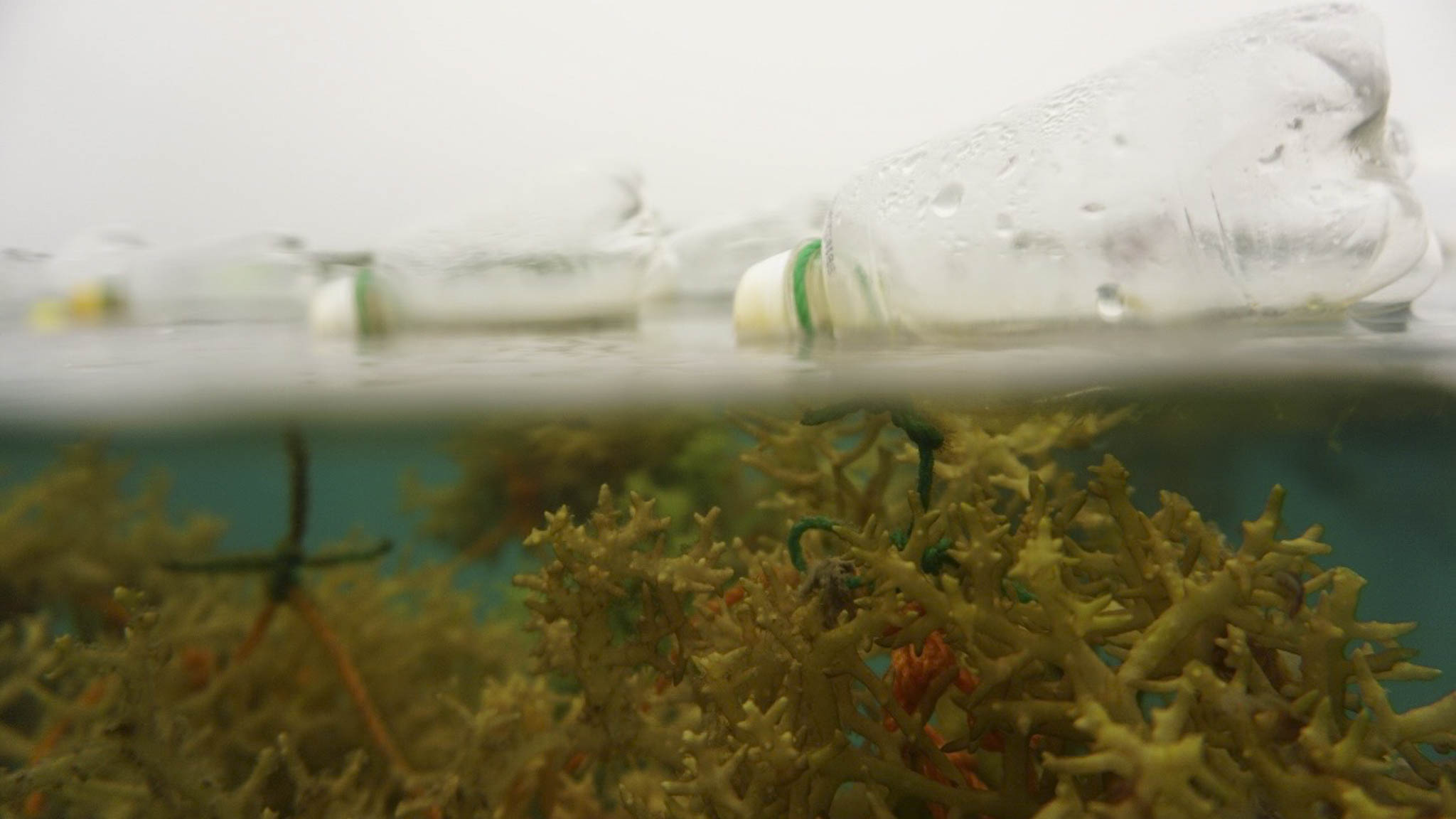
In recent years, research on kelp and other seaweeds has increasingly demonstrated potential health benefits, and they have rapidly gained popularity as daily support supplements. It is also being explored as a bio-alternative to plastics, driving increased demand for access to healthy seaweed and reputable growers. Prior to these discoveries, seaweed had long been dismissed, as its name suggests: a simple weed. Yet unlike those we see targeted by lawn-care ads, seaweed is now being hailed as a potential hero for a bluer future.
Could seaweed-based startups be a significant factor in restoring ocean habitats while also securing financial security and stewardship for coastal communities over their natural resources?
The health of our oceans supports the well-being of the communities that depend on them, making the restoration of marine ecosystems not only an environmental priority but also a social and economic one. Seaweed farming stands out as one of the rare solutions that delivers meaningful impact across the board. Seaweed absorbs carbon at remarkable rates, improves water quality by removing excess nutrients, and creates a natural habitat that boosts biodiversity—all without requiring fertilizers, freshwater, or farmable land. At the same time, it offers coastal communities a low-barrier, climate-resilient livelihood that can diversify income and strengthen local ecosystems.
When properly supported, seaweed and kelp farming can become a cornerstone of regional economic security. Farmers gain access to stable markets, communities gain new revenue streams, and ecosystems gain a regenerative ally. Yet the full potential of this industry remains out of reach for many coastal regions. Infrastructure, training, and market access are often limited, and while numerous organizations are working to close these gaps, their efforts still depend on reliable external investment and long-term backing.
As a versatile export used in health supplements, skincare, and biodegradable materials, seaweed has the potential to drive inclusive growth—but only if the systems around it are strong enough to enable farmers to participate and compete in an ever-changing world. That’s why support for the organizations building this foundation is just as critical as support for the farmers themselves. Without it, the communities best positioned to steward these marine resources lack the tools to benefit from them fully.


This is where conservationists like Gracie White and Conservation International Ventures LLC become integral to the conversation.
I was fortunate enough to interview Gracie, Director of Global Ocean Investments for Conservation International, for this article. She explained how Conservation International operates in support of smaller nonprofits and NGOs, specializing in flexible debt—meaning it offers adaptable loans and revenue-based financing to startups rooted in conservation—allowing CI to meet smaller companies where they are and provide realistic means for growth and independence, rather than strictly providing investment in the traditional venture capital model.
White, whose studies in environmental science at Yale University focused on sustainable food and agriculture, wrote her senior thesis on quantifying ecosystem services provided by seaweed and shellfish aquaculture. After graduation, she worked in kelp aquaculture in Connecticut. Briefly, she co-founded a startup focused on cultivating asparagopsis—a red alga believed to reduce methane production in ruminants—but then had a “lightbulb moment.” For Gracie, something clicked after reading a white paper on impact investing in fisheries. She decided to actively contact as many funds as possible to offer her time as an unpaid intern. Still, given her aquaculture experience rather than finance, no one took her up on it. She moved to California and attended UC Santa Barbara for her Master’s in Marine Resource Management, after which she secured internships with funds focused on the blue economy. Following graduate school, Gracie joined Conservation International Ventures LLC and has since played a key role in supporting early-stage startups that use seaweed to address environmental and socioeconomic challenges, among other blue economy solutions.
To better understand how these ideas and investments take shape in practice, it’s helpful to look more closely at some of the seaweed-focused startups Conservation International Ventures has supported. One is Earthshot Prize finalist COAST 4C, an organization making waves in seaweed innovation for both buyers and farmers.


COAST 4C: Collective passion for the ocean and support of coastal communities
COAST 4C began in the early 2000s when Nick Hill and Amado Blanco set out to understand the pressures facing Philippine fishing communities. Blanco, a longtime conservation leader, saw seaweed farmers struggling alongside declining fish stocks. At the same time, Hill—an ecologist working with the Zoological Society of London—spent years living in coastal villages and conducting thousands of interviews. Their shared conclusion was that lasting change required empowering communities to manage their own resources.
Having laid a foundation in ocean cleanup and recycling materials for consumer products, COAST 4C officially launched in 2020 and became independent in 2022, with the goal of providing high-quality, responsibly sourced seaweed for food, feed, fertilizer, and bioplastics, while promoting coastal restoration and community-led blue economies. Their approach focuses on community-managed Marine Protected Areas (iMPAs), which establish legal seaweed-growing zones, protect habitats, and give farmers long-term rights. COAST 4C also assists in forming cooperatives, trains farmers, and aims to develop regenerative seaweed farms within three years. Farmers receive premium prices for sustainably grown seaweed, while buyers get dependable access to high-quality, traceable red seaweed for global markets.
COAST 4C demonstrates what becomes possible when coastal communities are prioritized in conservation, and when sustainable seaweed farming provides a pathway to stable incomes, healthier reefs, and supply chains based on reciprocity rather than extraction. Building on a community-centered approach, let’s dive deeper into another company making waves that starts as just a drop—or rather, a seed—in the world of seaweed startups: Seadling.
Seadling: Seaweed solutions for people and planet
What began as a chiropractor’s break from city life while founder Simon Davis was sailing through Southeast Asia, adventure became a turning point after an unexpected encounter with seaweed. Witnessing the pressures on coastal waters, Davis was drawn to grassroots conservation after discovering seaweed farming in 2015. The idea emerged that this unassuming organism could actually be a regenerative powerhouse.
By 2018, Seadling had established a presence in Borneo and began assembling a team of scientists and seaweed experts to translate that early interest into a biotech company advancing seaweed science. In its foundational days, Seadling focused almost entirely on research and fieldwork, traveling across coastal Malaysia, Indonesia, and the Philippines to understand why farms were failing and what farmers needed most.
Joined by renowned seaweed expert Melania Lynn Cornish and a growing team of passionate scientists, they documented widespread seedstock degradation, climate-driven stressors, and the absence of standardized cultivation practices, with many farmers replanting cuttings from old or weakened lines that had lost potency over time. To address this core issue, Seadling began experimenting with hatchery-based solutions, adapting global aquaculture models to tropical seaweed species and smallholder realities. They built early nursery prototypes, tested more resilient strains, and collaborated closely with knowledgeable farmers to refine cultivation techniques, laying a stable foundation for a system capable of supplying strong, healthy seedlings season after season.
These early years also shaped Seadling’s community-centered approach. By working directly with smallholder farmers, cooperatives, and regional governments, they developed a farmer-support model that paired improved seedstock with training, monitoring, and technical assistance. Seadling had begun to demonstrate that hatchery-grown seedlings could dramatically improve yields and reduce losses. By the time Conservation International Ventures entered the picture as an investor, the groundwork had already been laid. What they needed was capital to scale their systems and reach more coastal communities across Southeast Asia.
Seadling’s work shows how upstream innovation can stabilize and strengthen seaweed farming. Downstream, another startup is pushing the boundaries of what seaweed can become, transforming it into a climate-friendly material with global impact potential. Sway represents a very different—but equally transformative—approach to seaweed innovation.
Sway: Regenerative resources for circular materials
Founded in California by designers and material innovators seeking a scalable alternative to petroleum-based plastics, the company emerged from a simple yet powerful question: What if packaging could be made from materials that return safely to the earth? Inspired by seaweed’s natural strength, flexibility, and biodegradability, the founders began experimenting with methods to convert this abundant marine resource into compostable films that could integrate seamlessly into existing manufacturing systems.
In the early days, Sway operated much like a research studio, testing dozens of seaweed species, refining material blends, and collaborating with scientists, engineers, and regenerative aquaculture partners to ensure its products were not only functional but also truly environmentally restorative. Based in the San Francisco Bay Area—a known hub for climate and tech innovation—the small company gained early traction by partnering with consumer brands eager to move away from single-use plastics.
Their materials are home-compostable, marine-safe, and designed to break down harmlessly, offering a truly tangible solution to global plastic pollution while creating new demand for sustainably farmed seaweed. Sway’s innovative technology, developed through years of research, has produced Thermoplastic Seaweed Pellets (TPSea™)—a biopolymer resin—capable of running on existing plastic manufacturing equipment. This resin melts and flows like plastic when heated, but is made primarily from seaweed-based materials and is 100% bio-based.
Conservation International Ventures invested in Sway to help scale this work, recognizing the company’s potential to reduce plastic waste and open new markets for regenerative aquaculture. In recent years, Sway has expanded its research and development capabilities, strengthened new and existing partnerships, and even advanced toward commercial-scale production. Their materials have earned recognition for both performance and environmental integrity, positioning Sway as a leader in the emerging bioplastics sector.
Today, Sway’s growth demonstrates how seaweed can play a role not only in ocean restoration but also in reshaping global supply chains. By transforming a regenerative marine resource into a high-value, climate-friendly material, Sway is helping pave the way toward a future where packaging supports, rather than harms, the planet.
Ultimately, the stories of COAST 4C, Seadling, and Sway remind us that grand gestures alone won’t shape the future of ocean conservation, but rather the steady, determined work of people who see possibilities where others don’t. Seaweed was once dismissed as a peripheral resource but is now becoming a quiet engine of transformation.
These startups demonstrate that when we treat seaweed not as waste or nuisance but as a regenerative material capable of restoring ecosystems, strengthening coastal livelihoods, and replacing extractive products, we unlock solutions that extend far beyond the shorelines where they begin.
Each company brings its own kind of ingenuity: COAST 4C building community-led supply chains that reward sustainable farming; Seadling pushing the boundaries of seaweed science to improve yields and ocean health; Sway turning seaweed into compostable materials that challenge the dominance of petroleum-based plastics.
Their innovations are small-scale compared to the enormity of the climate crisis. Yet they possess enormous capacity to transform existing systems—especially when supported by investors such as Conservation International, which recognizes that sustainability and profitability are not opposing forces but mutually reinforcing ones.
Behind these efforts are conservationists like Gracie White, who help ensure that economic growth does not stray from ecological integrity. Their work may happen quietly, but it keeps leaders grounded in the truth that conservation is not a side note to innovation—it’s the compass guiding long-term resilience.
With this kind of perspective-shaping strategy, these startups aren’t just creating new products; they’re helping coastal communities build circular economies that restore the ecosystems on which they rely.
Together, this network of innovators, investors, and conservationists working alongside coastal communities proves that seaweed can be far more than a crop. It can be a catalyst for rebalancing the relationship between human needs and ocean health, and a reminder that even the tiniest organisms can spark profound change when entrusted to people who believe in their potential.
An Article by Caitlyn Rain
Photos provided by Gracie White