
The Power of Art to Protect Our Oceans
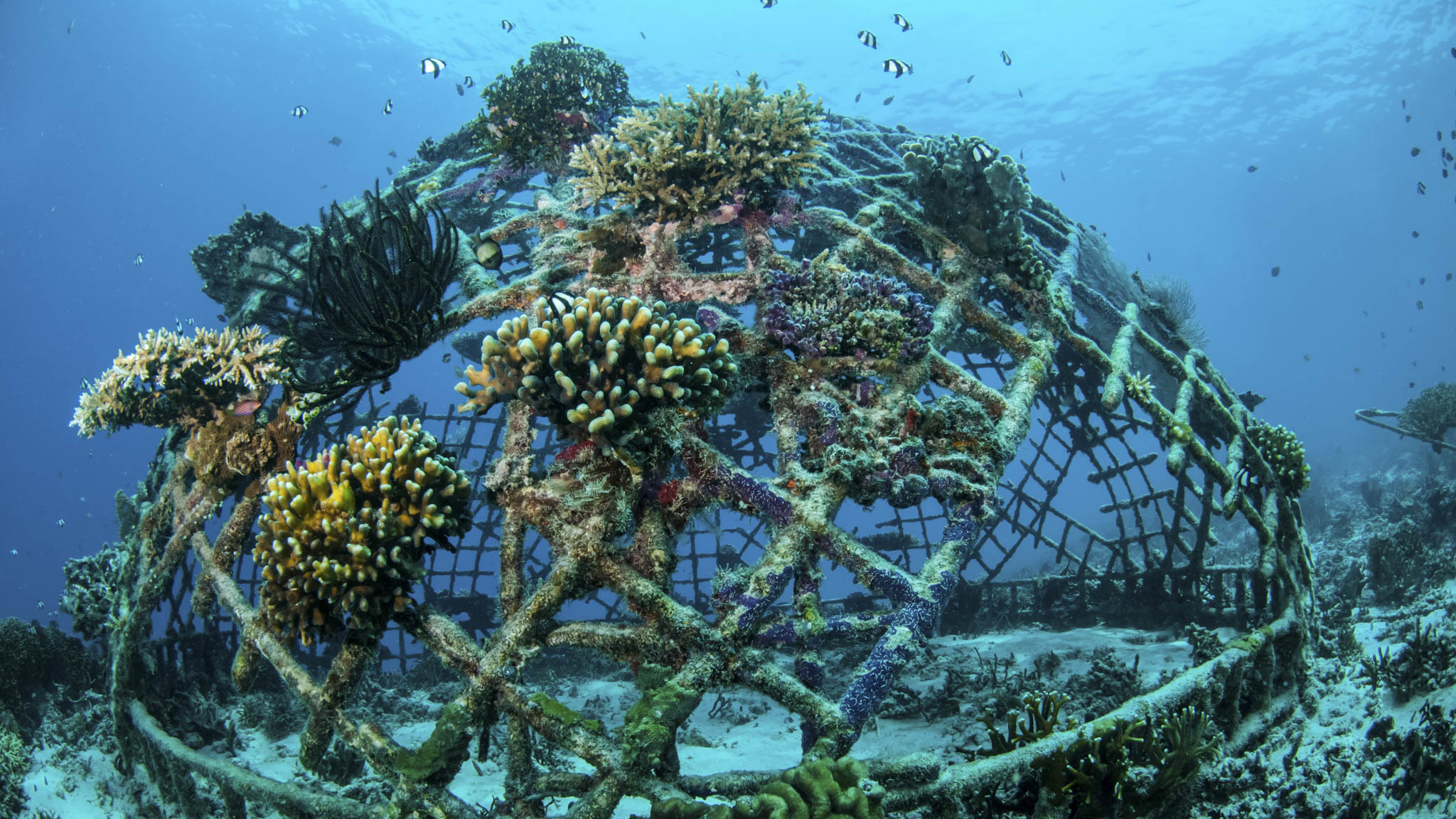
Off the coast of Italy, a striking art installation rises from the turquoise waters, capturing the attention of visitors and local communities alike. Created by artist Paolo Fanciulli, the installation is more than an aesthetic experience — it serves as a visual call to action, drawing attention to illegal trawling practices that have historically devastated the seabed and its ecosystems. By transforming environmental challenges into tangible artistic experiences, Paolo’s work demonstrates the potential for creative expression to support conservation outcomes.
Illegal trawling, a practice of dragging weighted nets across the seafloor, has long threatened marine habitats by destroying coral, disrupting fish populations, and altering the delicate balance of local ecosystems. According to the U.S. Geological Survey (2016), bottom trawling resuspends nearly as much sediment each year as all of the world’s river deposits — about 22 gigatons — drastically altering seafloor habitats and reducing light levels for foundational marine plants. Areas impacted by trawling have experienced significant declines in biodiversity and ecosystem resilience (USGS, 2016). Paolo’s installations, strategically placed in affected regions, aim to engage the public emotionally and raise awareness of these impacts, creating a new layer of social pressure to protect the oceans.
“One of the most effective solutions is to physically prevent trawling through artificial reefs,” Paolo explained in an interview in 2021. “So I started working on this project, trying to combine the protection of the seabed with something that could also give an added value to our environment, something as beautiful as a sculpture” (Learn, 2021).

His artistic approach combines visual storytelling with environmental advocacy, offering viewers a way to connect with the unseen consequences of human activity in the ocean. The work not only attracts attention from local communities and tourists but has also sparked broader conversations about sustainable fishing practices and marine conservation policies.
Paolo’s efforts began long before any formal organization existed. As an artisanal fisherman in Talamone, Tuscany, he witnessed firsthand how illegal bottom trawling was devastating local fish stocks and destroying seafloor habitats. “I understood that the success of my fishing activity was intrinsically linked to the good state of the environment” (Learn, 2021). Over the years, he took personal action against illegal trawlers, at times risking his safety to protect the marine ecosystem by physically obstructing destructive nets with concrete blocks.
Building on decades of individual activism, Paolo co-founded Casa dei Pesci in 2012. The nonprofit grew directly from his vision and early efforts, institutionalizing his fight against illegal trawling while expanding it into a broader conservation and education mission. In the areas where Paolo’s sculptures and protective blocks have been placed, illegal trawling has reportedly stopped, and observers note that Posidonia meadows and marine life — including fish, lobsters, and turtles — have begun to return (Hughes, 2022). The project has also drawn divers and snorkelers, helping raise awareness of sustainable fishing practices (Sherlock, 2025). By combining art with practical conservation efforts, Casa dei Pesci works to protect Posidonia meadows, prevent destructive trawling, and raise awareness of sustainable fishing practices.
Social norms and public visibility further amplify this effect. By integrating conservation messaging into public spaces, Paolo and Casa dei Pesci make ethical behaviors — like avoiding harmful fishing practices or supporting marine reserves — more socially salient. When viewers experience the art in a communal setting or share images on social media, it reinforces the collective importance of protecting the environment while offering a positive model for behavior change.
This approach aligns with research demonstrating that emotionally engaging messages paired with actionable guidance can increase motivation for pro-environmental behavior (Rakib, Chang, & Jones, 2022; Chen & Jiang, 2025). By framing ethical behaviors in an accessible, meaningful way, Paolo’s projects bridge the gap between awareness and action, empowering audiences to make choices that benefit both themselves and the ecosystem.
Beyond awareness, Paolo’s installations and Casa dei Pesci’s initiatives offer practical alternatives for community engagement. Educational workshops encourage participants to explore marine habitats through guided observation, interactive exhibits, and artistic projects, fostering hands-on learning while discouraging environmentally harmful practices. These initiatives have inspired local fishers to adopt sustainable techniques, increased public support for marine reserves, and influenced similar art-based conservation projects in other coastal regions, demonstrating the broader ripple effect of Paolo’s work (Planet Wild, n.d.).

Paolo’s work also highlights the potential for replication and adaptation. Inspired by his approach, other artists and nonprofits are exploring how art can be leveraged to address local environmental challenges, from coral reef protection to urban pollution awareness.
By translating complex ecological issues into compelling visual narratives, these initiatives demonstrate that creativity can complement scientific research and policy efforts, amplifying the reach and impact of conservation campaigns.
Art-driven conservation illustrates a broader principle: human creativity can be a catalyst for ecological stewardship. Whether through installations in the ocean, gallery exhibitions, or community art projects, artistic interventions provide accessible, engaging pathways for the public to understand, value, and protect the environment. As Paolo and Casa dei Pesci show, creative work can do more than inspire — it can contribute to measurable environmental outcomes, turning awareness into action and spectators into stewards.
As environmental challenges grow increasingly complex, integrating art into conservation strategies offers a promising avenue for engagement. By connecting emotional resonance with actionable guidance, initiatives like Paolo’s installations demonstrate that art is not just a reflection of nature — it can become a tool for its protection.
An Article by Ashley Glasco