
Some stories don’t begin with a discovery.
They begin with recognition.
When a photograph surfaced from the Caribbean showing a humpback whale with a calf, marine biologist Charla J. Basran knew immediately what she was seeing. Not just a mother and her newborn, but an individual whale she had known for years in Icelandic waters. Her name is “Copyright”.
That single image quietly confirmed something remarkable: an Icelandic humpback whale had traveled to the West Indies to give birth and was beginning the long journey back north with her calf.
Months later, the whale was seen again in Iceland. The calf was still with her.
The circle was complete.

Why This Journey Matters
For scientists, this was the first documented migration of an Icelandic humpback whale mother–calf pair from Caribbean breeding grounds back to Icelandic feeding grounds. For us, it is a story about endurance and about what whales need from us.
Humpback whale mothers do not feed in warm breeding waters. Everything they do there, pregnancy, birth, nursing, protection, comes from energy stored months earlier in cold northern seas. By the time they return, they may have lost up to a third of their body weight.
The journey north is not just survival. It is teaching. The calf learns where food is found, how to navigate vast distances, and how to live in an ocean that is increasingly shaped by human activity.
Soon, the calf will grow independent. Whether mother and offspring will ever meet again is unknown. For whales, reunion is never guaranteed.

Whale watching is for everyone. Try whale listening!
Much of Charla’s work focuses on how whales move through a noisy ocean. In Iceland, she studies how humpback whales respond to sound, natural and human-made, on their feeding grounds.
Whales are often described as solitary, but this is misleading. They are deeply acoustic animals, connected by sound over distances far beyond our sight. Noise from ships, fishing gear, and industrial activity can interrupt these connections in ways we are only beginning to understand.
Research on acoustic warning devices used on fishing gear revealed something important: whales don’t simply panic or flee. They listen. They adjust. In some cases, sound helps them find safe paths around nets rather than into them.
It is a reminder that intelligence in the ocean often reveals itself quietly.
A message on their body
Not all whale stories end as well.
Along Iceland’s coast, many humpback whales carry scars: thin white lines and deep grooves left by fishing ropes and nets. By carefully documenting these marks, Charla’s work helped produce the first estimates of whale entanglement rates in Icelandic waters.
The results were sobering. A significant proportion of whales show evidence of having been entangled at least once in their lives.
What surprised researchers most was how much fishers already knew. Many had stories of whales in their nets, damaged gear, close calls. Often, these incidents went unreported, not from indifference, but fear.
Entanglement is not only a conservation issue. It affects whales and fishing communities alike. It is a shared problem in a shared ocean. And it is a lot more common that one may think: 25-50% end up in a net sooner or later.

Protecting pathways
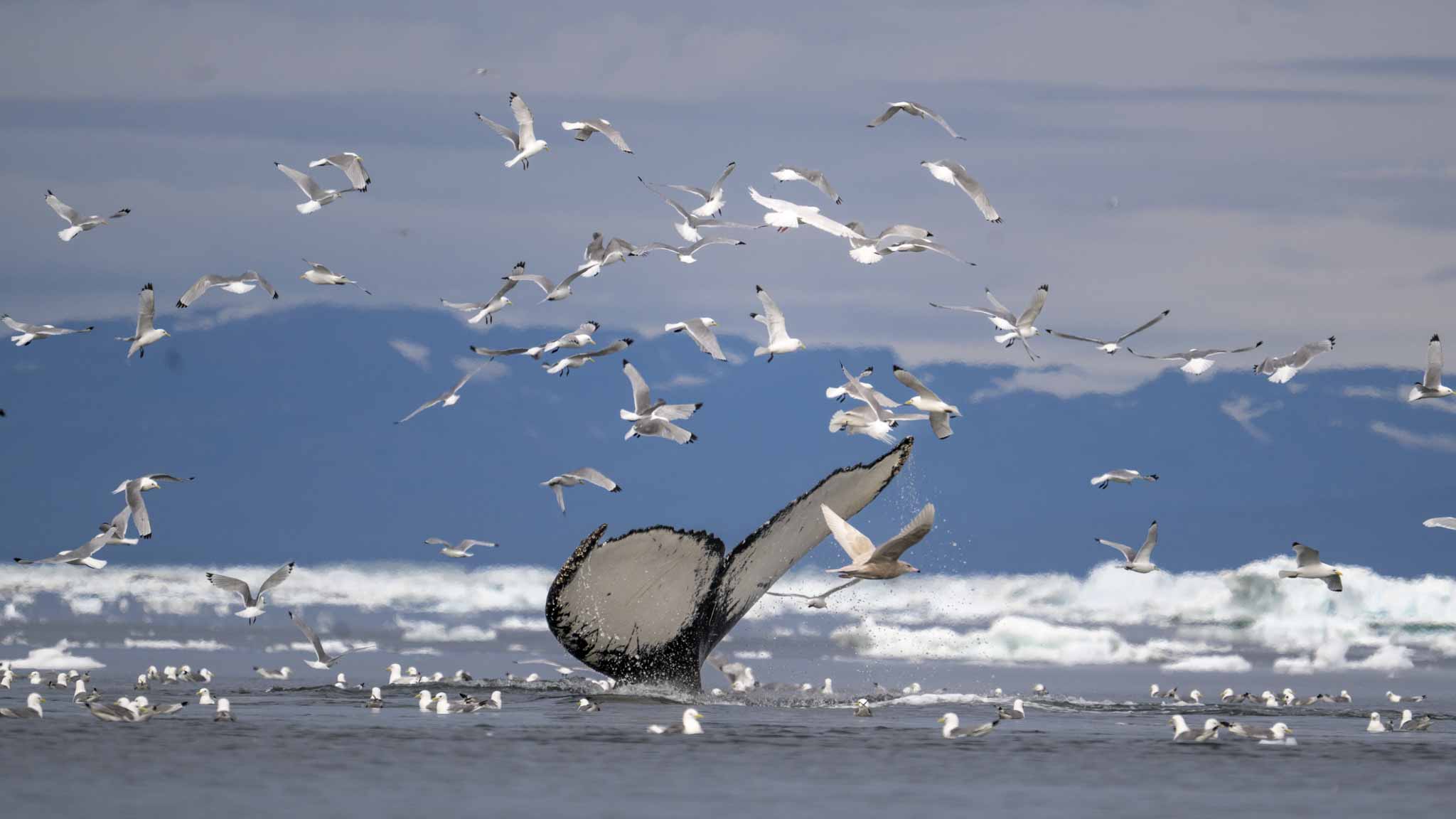
Humpback whales are often celebrated for their most dramatic moments: breaching, tail-slapping, towering against the sky. But their most extraordinary achievements are quieter: navigation across entire oceans, communication through sound, and the care of a single calf over thousands of kilometers.
Charla’s work reminds us that protecting whales is not just about protecting places. It is about protecting pathways, migration routes, feeding grounds, and acoustic space.
The story of this mother and calf is not only about science. It is about connection. About how one familiar fluke, recognized in a photograph half a world away, can reveal just how interconnected the ocean truly is.
An Article by Carina Zettel