
Science is constantly advancing, all thanks to scientists constantly putting in long hours of work conducting extensive research. One of the most important areas of marine science that can help us better understand ocean health and make proper decisions on further initiatives is shark research. Sharks are some of the most feared animals worldwide, yet they are highly misunderstood. Let’s dive deeper into the wonderful world of shark research and learn all about why shark research projects help better the planet and science as a whole.

All research was conducted under Florida permits held by Florida International University scientists. This expedition was made possible with funding from the Palm Beach International Boat Show Gives Back grant program. Photo credit: ANGARI Foundation
One way in which researchers can gain a lot of helpful information regarding sharks’ behavior, feeding patterns, and whereabouts is by tagging them. When a shark is tagged, either a satellite tag is permanently attached to the shark’s dorsal fin, a dart tag is inserted into the muscle on the base of the shark’s dorsal fin, or an acoustic tag is surgically implanted in its abdomen. These tags enable marine biologists to monitor a specific shark’s location and behavior as it lives in the open ocean.

This summer, I had the incredible opportunity of joining the ANGARI Foundation on a shark research expedition off the eastern coast of Florida alongside shark researchers from Florida International University and an enthusiastic group of environmental educators. During this trip, I got to immerse myself in the wonderful world of shark research and conservation. As a biologist having worked mainly with sea turtles and coral, entering shark territory was a whole new adventure for me and I was so excited to be part of it because I am very passionate about sharks!
Before going offshore, we deployed undersea cameras called baited remote underwater video systems (BRUVS) in the Lake Worth Lagoon, which allowed us to see what kind of marine life was present in the area. Although we were looking for sharks, plenty of fish and a stingray swam by the camera and said hello! Once we reached the coastal waters of the Atlantic Ocean, it was time to prepare the drumlines. Using baited hooks and anchors dropped onto the sandy seafloor held in place by a buoy on the surface, the drumlines were checked every about every 45 minutes to see if a shark was caught on the line. From deploying drumlines in the water to reeling in sharks, this expedition was a shark enthusiast’s experience of a lifetime.

Capturing sharks and handling sharks was a brave feat, and this team effort was executed perfectly within reasonable time frames to minimize stress on each shark. Measurements were recorded along with the sex of each shark, and we took fin clips, muscle samples, and fecal samples to better understand every individual shark. Dart tags were attached to the base of their dorsal fins so they can be tracked for years to come, as they are part of the NOAA Cooperative Shark Tagging program.

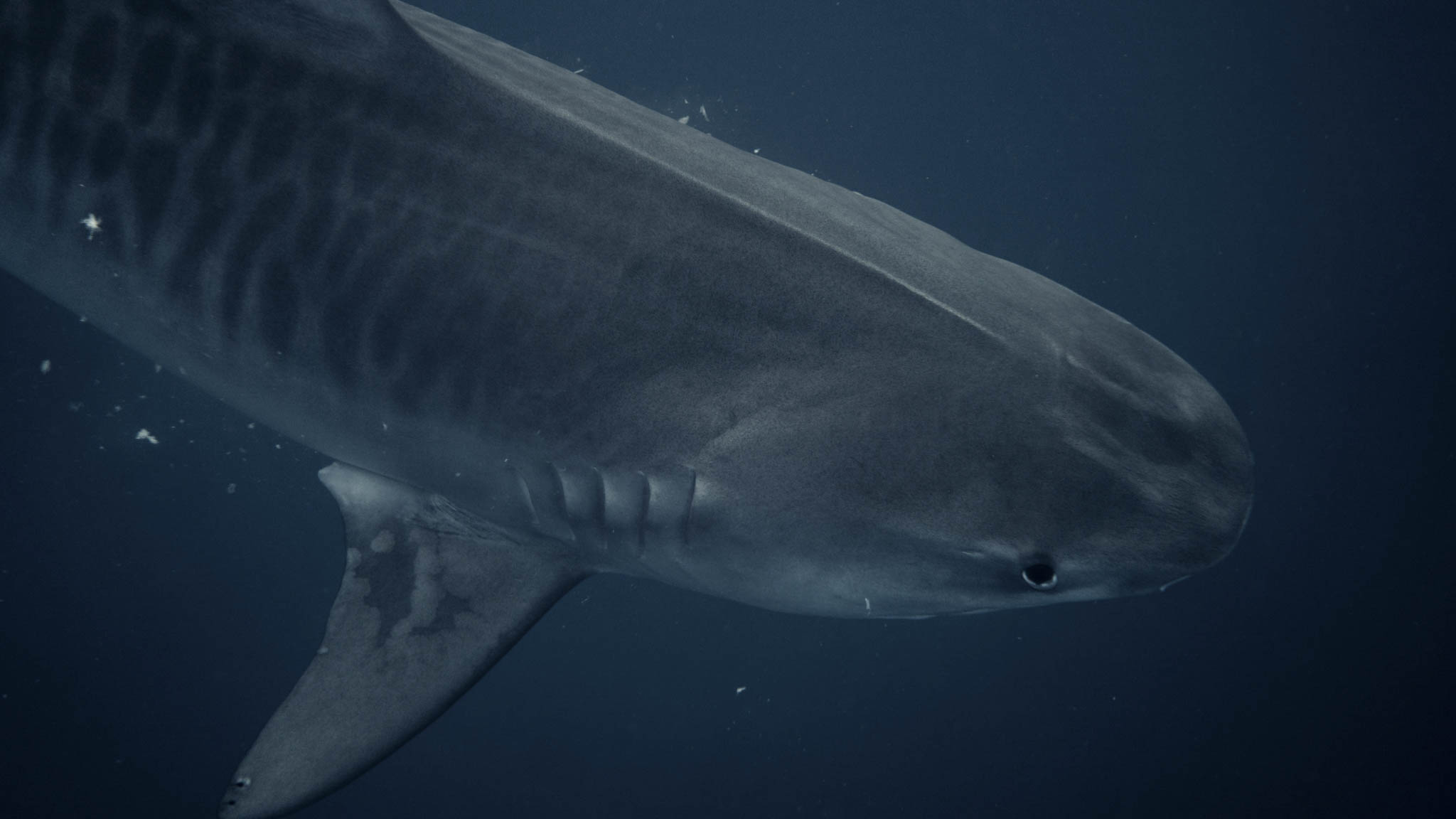
During this expedition, we captured, tagged, and released two tiger sharks (Galeocerdo cuvier), three nurse sharks (Ginglymostoma cirratum) and five sandbar sharks (Carcharhinus plumbeus). After tagging the sharks and collecting all the data we needed from them, each one was humanely unhooked and safely released back into the ocean. It was an incredible experience being part of such an exciting expedition while being at the front lines of shark research. With this data, we can learn so much more about sharks and how they live, behave, and even what they eat.
I am so grateful for this opportunity to witness sharks in their natural habitat and engage in the research process. The data we collected on this trip will help shape the way we look at science from the lens of shark conservation. The work shark researchers are doing all around the world is so important as we protect the animals some people fear the most.
an article by by Nicole Castilla, All research was conducted under Florida permits held by Florida International University Scientists. This expedition was made possible with funding from the Palm Beach International Boat Show Gives Back grant program. Photo credit: ANGARI Foundation