

Located in a small bay of the Marquesas Islands, you can hear the laughter of children off in the distance — swimming, enjoying the day. But something more magical was happening beneath the surface and throughout the village. These children were taking on an important role in the creation of the world’s first Educational Marine Area (EMA).
Guillaume Beaudoin — a cinematographer and director — was hitchhiking across the South Pacific to capture the stories of people taking action against climate change. Along the way, he met Felix Barsinas, the mayor of Tahuata and one of the earliest supporters of the “Pakaihi i te Moana” Marquesas Oceanographic Campaign led by the primary school students of Vaitahu.
“This type of initiative is completely new; it doesn’t exist anywhere else at the moment,” Felix expressed during an interview with Tahiti Infos. “Therefore, we wish to continue working with the government and with the support of the French Agency for Marine Protected Areas (AMPA), to create a ‘marine educational area’ label so that we can share our experience with all schools in French Polynesia that wish to participate.”
And so, they did!

In 2012, the primary school students of Vaitahu wanted to take responsibility for protecting the stretch of ocean in front of their school, creating what became known as an Educational Marine Area (EMA).
An EMA is a program in which school students are given responsibility for a designated stretch of their local coastline. Working alongside scientists and marine stakeholders, they take part in studying and monitoring their marine environment as citizen scientists. In Vaitahu, this meant that students were directly involved in observing the local ecosystem, identifying environmental threats, and gathering data to better understand changes in their coastal environment. They also participated in a Children’s Sea Council, where the students, experts, and stakeholders discussed ideas, proposed solutions, and helped decide on collective actions to improve and protect their marine area. These actions were then implemented locally, making students active participants rather than passive learners.
As word spread across French Polynesia, more schools adopted the model. Within three years, the initiative had expanded to more than 1,000 schools and received support from organizations such as the French Biodiversity Agency, according to EMA Australia.
By the time Guillaume arrived in 2017, while filming his documentary “Across the Salty Roads”, the initiative, which began in 2012, had already inspired schools across French Polynesia. There, he was able to see firsthand the excitement this project brought to Tahuata: children who were not only learning about conservation but actively living it.
“What struck me was they were living a free and happy life,” Guillaume explained when seeing the children participating in marine conservation. “They were truly part of everything nature-related in that bay.”

The bay itself felt worlds away from the rest of French Polynesia. Accessible only by boat, Guillaume came across a lush green landscape surrounded by dramatic mountains, where children swam freely through the bay.
Later that same day, he saw those same children in the classroom discussing marine conservation. In a village where life revolves around the ocean, the connection between education and everyday life felt natural rather than forced.

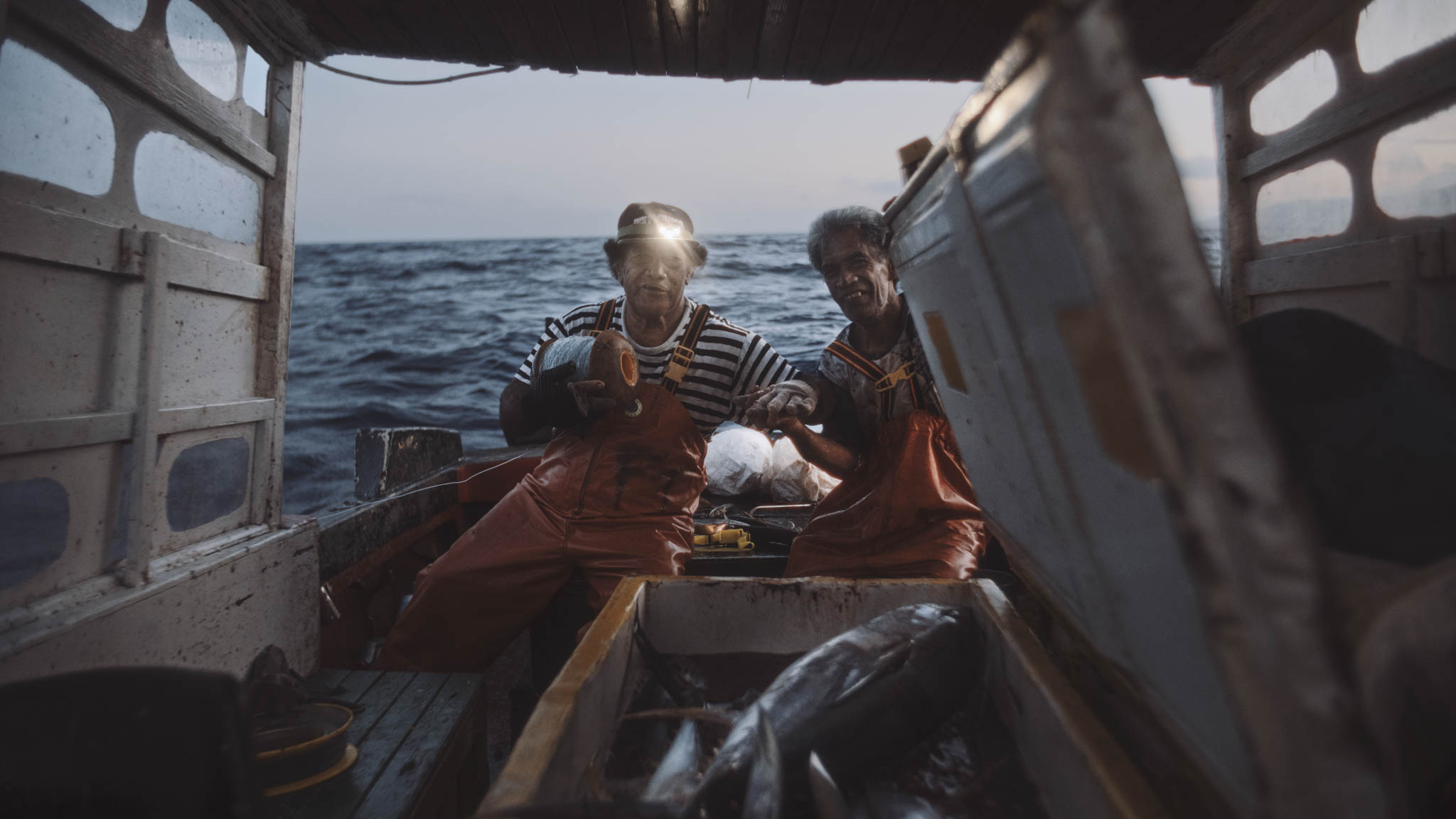
What stood out even more was the collaboration between generations. During his visit, Guillaume spent an entire night fishing for yellowfin tuna with local elders, learning firsthand about traditional fishing practices and the community’s relationship with the sea. The same elders who shared their knowledge with him were also sharing it with the students, teaching them lessons that could never be found in a textbook.
But the learning did not stop there.
Scientists regularly visited the school, bringing new research and observations about the bay’s ecosystem. The students then carried that information home, sharing it with their parents and grandparents. For Guillaume, one of the most surprising and beautiful aspects of the project was seeing how knowledge flowed in every direction — from elders to children, from scientists to students, and from students back into the wider community.
“It’s effective because the knowledge travels both ways,” Guillaume explained. “It considers the environment as part of what education should be about and the specific environment that the people are living in.”

In Vaitahu, conservation was no longer confined to the classroom; it had become part of everyday life.
In a world facing evolving climate change and biodiversity loss, education has become a key factor. In a place such as Vaitahu — remote and less impacted by tourism — it provides a unique opportunity to show the impact a community can have on its local ecosystem.
Beyond education and marine conservation, Vaitahu’s campaign demonstrates a simple but powerful truth: meaningful conservation has no age limit. When young people are entrusted with responsibility and guided by their communities, they can become some of the most effective guardians of the natural world.
An Article by Ashley Glasco