
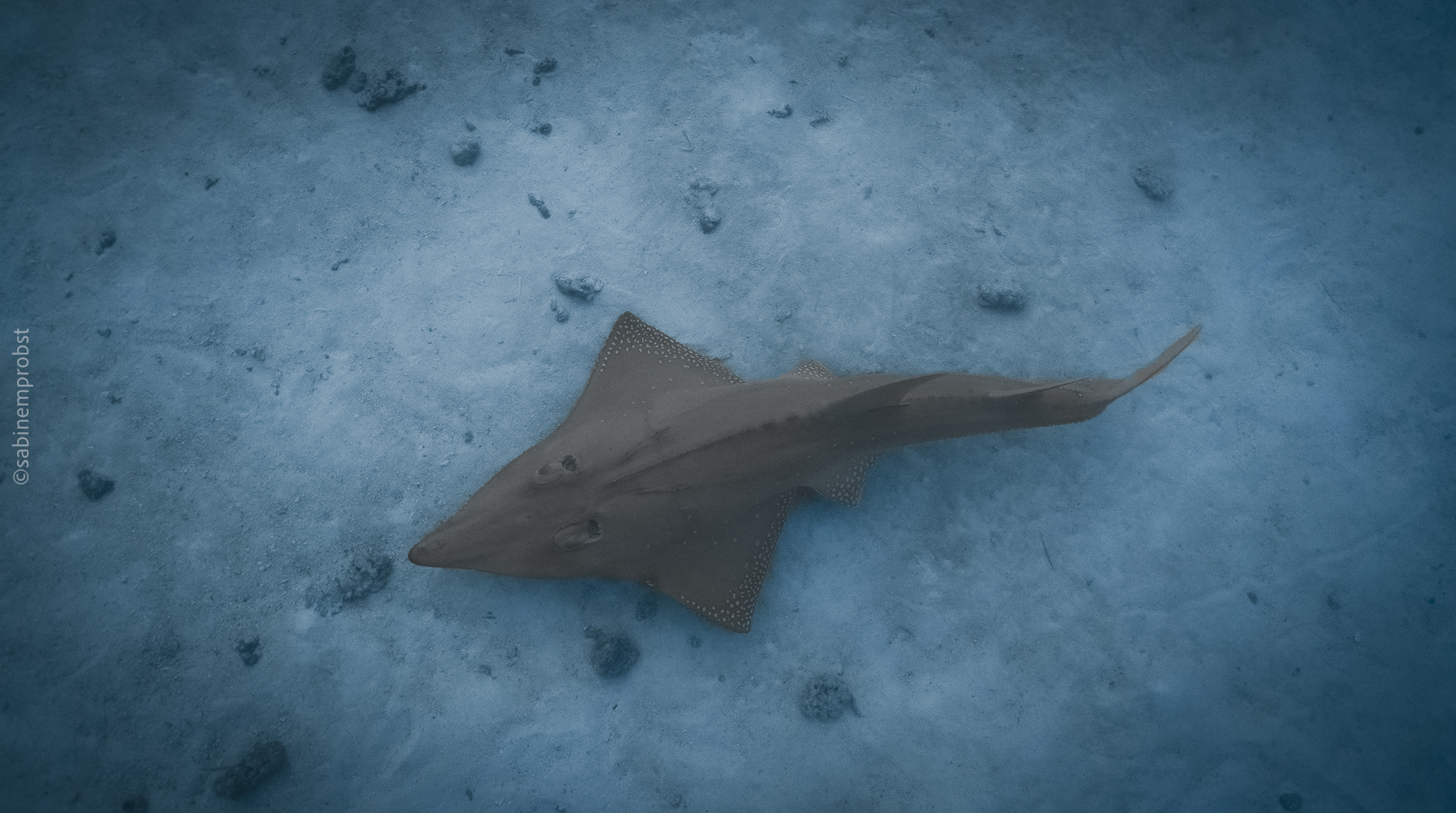
The remarkable world of rays
They are the most graceful swimmers in our oceans, and giants among their kind. Rays, the unique relatives of sharks, are crucial to our oceans’ ecosystem.
Classified into 26 families and over 600 species, rays live throughout the world’s oceans. Despite their colossal appearance, they are gentle creatures and are blessed with the largest brain of all fish making them not only masters of problem solving but also artists of social interaction. Species like manta rays and certain pelagic rays must remain in constant motion to survive, as they rely on water flowing over their gills to breathe. Adventurously, they follow the ebb and flow of the ocean currents. On their daily movements they gather nutrients and act as a fertilizer for the coral reefs on which they and numerous other species depend. Stingrays and skates, among others, can indeed rest on the seabed thanks to their spiracles. They draw water in and pass it over their gills to breathe while remaining motionless.

As rays reproduce infrequently, only giving birth to one or two pups every two to three years, the added impact of climate change and human activity can put populations and the entire species at risk of disappearing from our oceans. Rays are caught and traded both legally and illegally for food, medicine and leather. Their size – they can reach seven meters in width – making them easy victims of bycatch, and ghost nets and causes entanglement that can lead to severe or lethal injuries. In addition, overfishing affects rays due to their position on the top levels of the aquatic food chain while bottom trawling and other illegal fishing methods effectively destroy their habitats.
Since rays have only been studied in detail for about a decade, much of their life is still unknown. But it is a fact that if ray populations decline, the entire ecosystem becomes unbalanced and unhealthy, which is why ray conservation needs to be established worldwide.

Conservation:
There are already great stories to tell. Anyone and everyone can actively help conserve our oceans and protect rays. Simple actions like reducing plastic waste, supporting sustainable seafood choices, advocating for marine protected areas, and spreading awareness about the importance of marine life can make a big difference. People can also choose eco-friendly travel options that respect ray habitats, and participate in beach cleanups or marine conservation programs. By becoming informed and encouraging others to do the same, we can build a broader movement for the protection of these incredible creatures.
The Manta Trust is one of many organizations that studies rays, their habitats, biology, and ecology, and they’ve gained so much expertise by spending time with these majestic creatures in the water. They conduct vital research to understand the threats facing ray populations, including targeted fishing, bycatch, poorly managed tourism, and environmental issues like reef degradation, pollution, and changes in plankton productivity. Their research is presented in a logical way for everyone to understand and is also translated into locally spoken minority languages. Their work is incredibly important, and it includes tagging rays to track their movements, identifying individuals through photos to monitor populations, and collecting water samples to measure plankton levels, which are an essential food source for the rays. They also rescue and rehabilitate rays caught in fishing gear, ensuring these magnificent animals can continue to thrive. Not only do they educate people theoretically with their research, but also accompany the community members in the water with mantas and showing them how to interact with these amazing animals. You can support these incredible organizations through donations or volunteering, which will amplify efforts to protect both rays and our oceans.

Article by: Carolina Leiter
Photographs by: Sabine M. Probst