
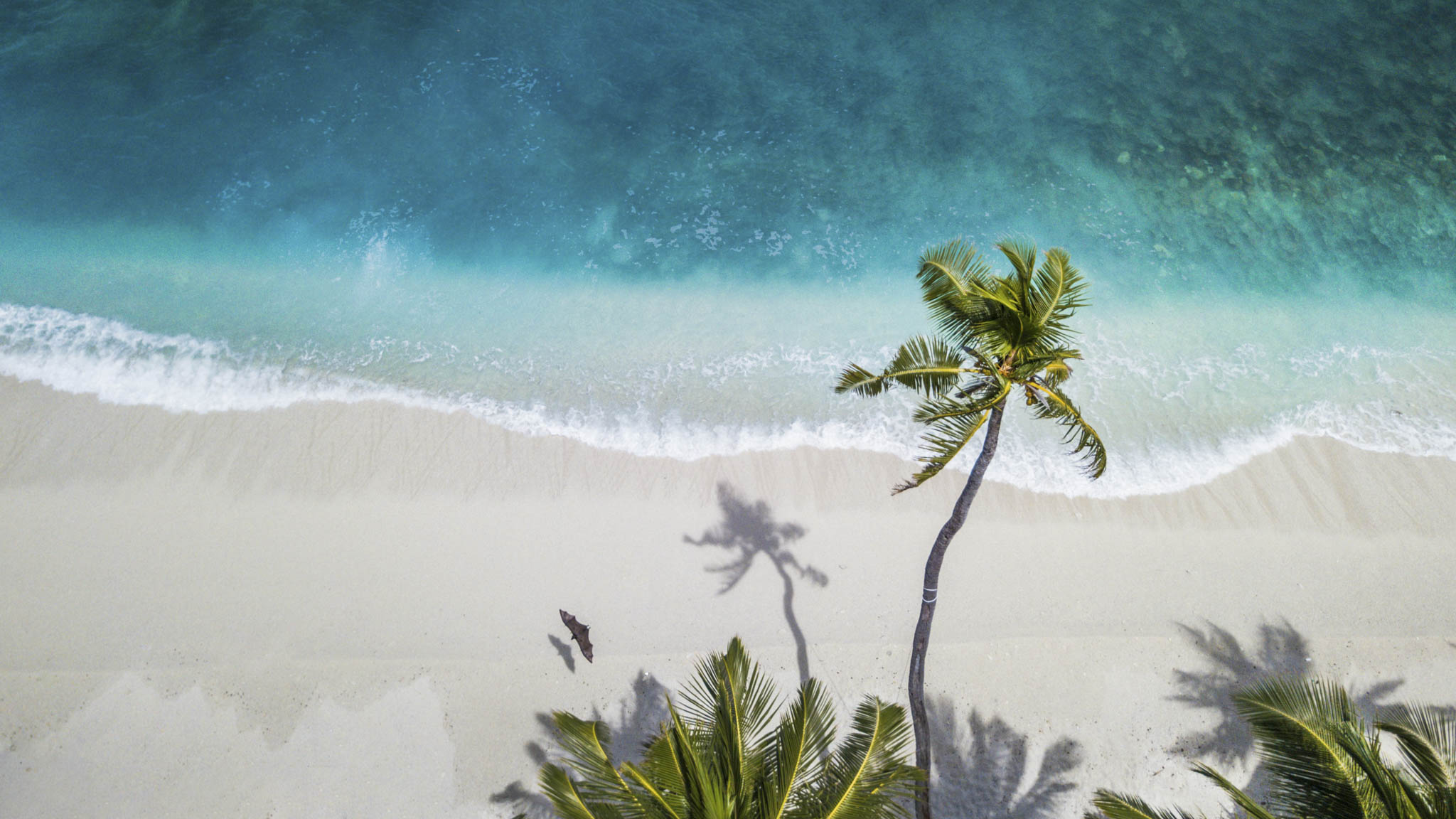
At first glance, coasts seem unmovable. Solid formations, never ending dunes, gentle waves lapping at the beach. Look closer and you will see that sand is objected to constant movement.
You scoop up a handful and it immediately begins to escape, slipping through the gaps between your fingers grain by grain. The smallest particles cling briefly to your damp skin before the next breeze carries them away. Around you, children are digging moats destined to collapse with the incoming tide. Someone is reading a book beneath a striped umbrella. A pair of seagulls patrol the waterline with the seriousness of police officers. It is the kind of beach scene that feels familiar enough to belong almost anywhere.
Most of us never look closely at the sand itself, but if you do, the beach begins to change.
The sand beneath your feet is no longer just the backdrop to a dreamy holiday. It turns into fragments of mountains, shells, coral skeletons and ancient reefs. Some grains may have started their journey hundreds or even thousands of kilometres away, carried downstream by rivers, ground apart by waves, or released from rocks that have been slowly crumbling for millions of years. Others were once alive. Every step across the shoreline is a walk across geological history written in microscopic dimensions.

Where does all of that history come from?
It is easy to think of sand as a permanent feature of coastlines, something that simply exists wherever the ocean touches the land. In reality, every grain has an origin story. Most begin their journey far from the beach itself, locked inside mountains, cliffs, and rocky outcrops. Rainwater seeps into cracks, rivers carry away loose fragments, and waves relentlessly batter exposed shorelines. Over thousands to millions of years, these forces break solid rock into smaller and smaller pieces until individual grains of sands are born.
The exact composition of a beach depends on the landscape that surrounds it. On many temperate coastlines, sand is dominated by quartz, a hard mineral that can survive a long journey from mountain to sea. Rivers transport these grains downstream, where waves sort and redistribute them along the coast. The result is the familiar golden or pale-brown sand found on beaches around the world.

But not all sand comes from rock.
On tropical shores, beaches are the result of finely grounded remains of living organisms. Coral skeletons, seashells, and other calcium-carbonate structures are gradually broken apart by waves, storms, and the creatures that feed on them. In some locations, much of the brilliant white sand can be traced back to the coral reefs just offshore. Even parrotfish play a role, scraping algae from coral surfaces and excreting the collaterally digested coral fragments as sand.
Elsewhere, volcanoes are responsible for the dark and dramatic scenery of nearby shorelines. Black-sand beaches form when lava cools into dark volcanic rock that is later eroded into fine grains. Whether white, golden, pink, or black, the color beneath our feet can act as a clue, revealing the geological and biological processes that built the coastline grain by grain.

But sand does not only tell us where a beach came from. It can also tell us what kind of forces continue to shape it today. To a geologist, a beach is something like a crime scene. Every grain carries evidence. Fine, powdery sand often points to calmer environments where waves lack the energy to move larger particles. Coarser beaches, strewn with larger grains and pebbles, are usually shaped by stronger waves that wash lighter material away. Even the sorting of grains can reveal something about the shoreline’s history. Uniform sands suggest long periods of steady wave action, while a mixture of sizes may hint at recent storms or disturbances. Sometimes subtle shifts in color across a shoreline can even reveal changes in sediment supply caused by floods, storms, or alterations to nearby rivers.
Human activity can leave its mark as well.

Dams trap sediment that would otherwise replenish beaches downstream. Coastal development alters currents and interrupts the natural movement of sand along the shore. In many parts of the world, sand itself has become a valuable resource, extracted for construction at rates that exceed natural replenishment. Even pollution can become part of the record. On some beaches, microscopic plastic fragments now mingle with mineral grains and shell fragments, creating a geological signature that would have been unimaginable just a century ago.
Taken together, beaches become archives written in sediment. Each tide adds a new layer to the story, while storms can erase chapters in a single day. The shoreline may appear fixed when viewed from a beach towel, but it is constantly being rewritten by wind, waves, currents, and increasingly by human activity. It is a living record of the forces that have shaped the coast in the past and those that continue to shape it today.
An article written by Kim-Isabelle Mayer
Photo credits: Griffin Wooldridge (Pexels), Hassan Ouajbi (Unsplash), Nattu Adnan (Unsplash), picjumbo (Pexels), Clay Banks (Unsplash)