
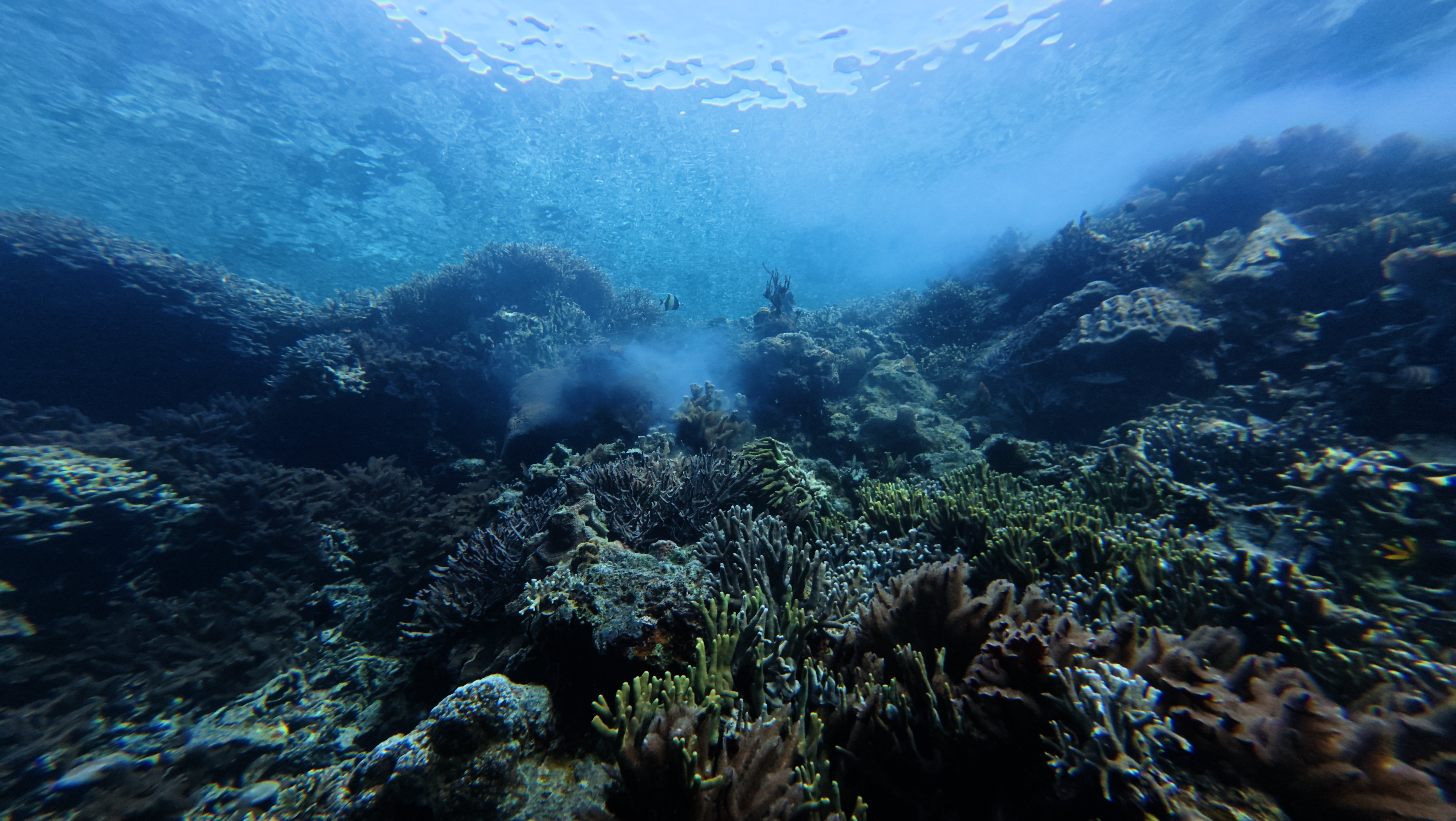
Porites rus After Sunrise
Have you ever descended into the reef and felt the ocean turn murky, but not because of the sediment? I did, and in that moment, it felt like I was drifting through a mountain valley at dawn, surrounded by fog rolling gently across the landscape. Until I realized -I wasn’t on land at all. The ocean had turned cloudy, as if the sky’s mist had descended into the reef. When the phenomenon ends, visibility drops and the water turns milky
Beneath the waves, Porites rus releases its future into the daylight, a rare spectacle of new life born under the sun. For most corals, the spawning happens in the quiet hours after dark. When their predator sleeps and is inactive, the coral releases the vulnerable eggs and sperm. While most coral follow the moon’s silent ritual, Porites rus dares to be different, releasing its future in the light of the day. The Porites rus waits until accumulating enough light for gamete expulsion. On the other hand, light decreases with depth and makes a gap between the shallow and the deep colonies. Near the surface, Porites rus releases gametes quickly -1.5 hour after sunrise. Deeper colonies delay until around 5 hours later.


From four to six days after the full moon in October to April, its spawning is so predictable and synchronized that the same spectacle unfolds across vast distances —from the Pacific Ocean to the Indian Ocean. Its synchronization is across more than 18.000 km. Ninety minutes after sunrise, the male colony pours its sperm into the sea. Twenty minutes later, the female colony is casting their egg into the water. As a gonochoric coral, this delay between female and male spawning enhances fertilization success. Sperm and eggs meet in the water column, fertilize, and begin development. The fertilized cell undergoes division then forming larvae that drift until find a suitable substrate. Once settled, the larvae grow into colonies that continue the cycle of its parents.
The male spawning releases a surge of sperm that clouds the water in a striking white veil —so vivid it can be seen even from afar. It is a mystical performance, where the ocean dresses itself in white clouds and like nature’s own Halloween magic. Meanwhile, the egg is delicate in size and even barely visible to the naked eye. Their predator, coralivorous fish such as butterflyfish, allow us to spotlight the female colonies. They feast abundantly on Porites rus eggs, as if at a grand banquet.

If you live near a coral reef in the Pacific Ocean or the Indian Ocean, there is still an opportunity to witness this magical spectacle! Waking up at 6 AM may feel tough, but the reward is unforgettable. Monitoring the reproduction pattern is a required action for conservation efforts and day spawner coral remains a mystery, awaiting deeper study.
An Article & Photos by Nabila Ayu Fitriani