
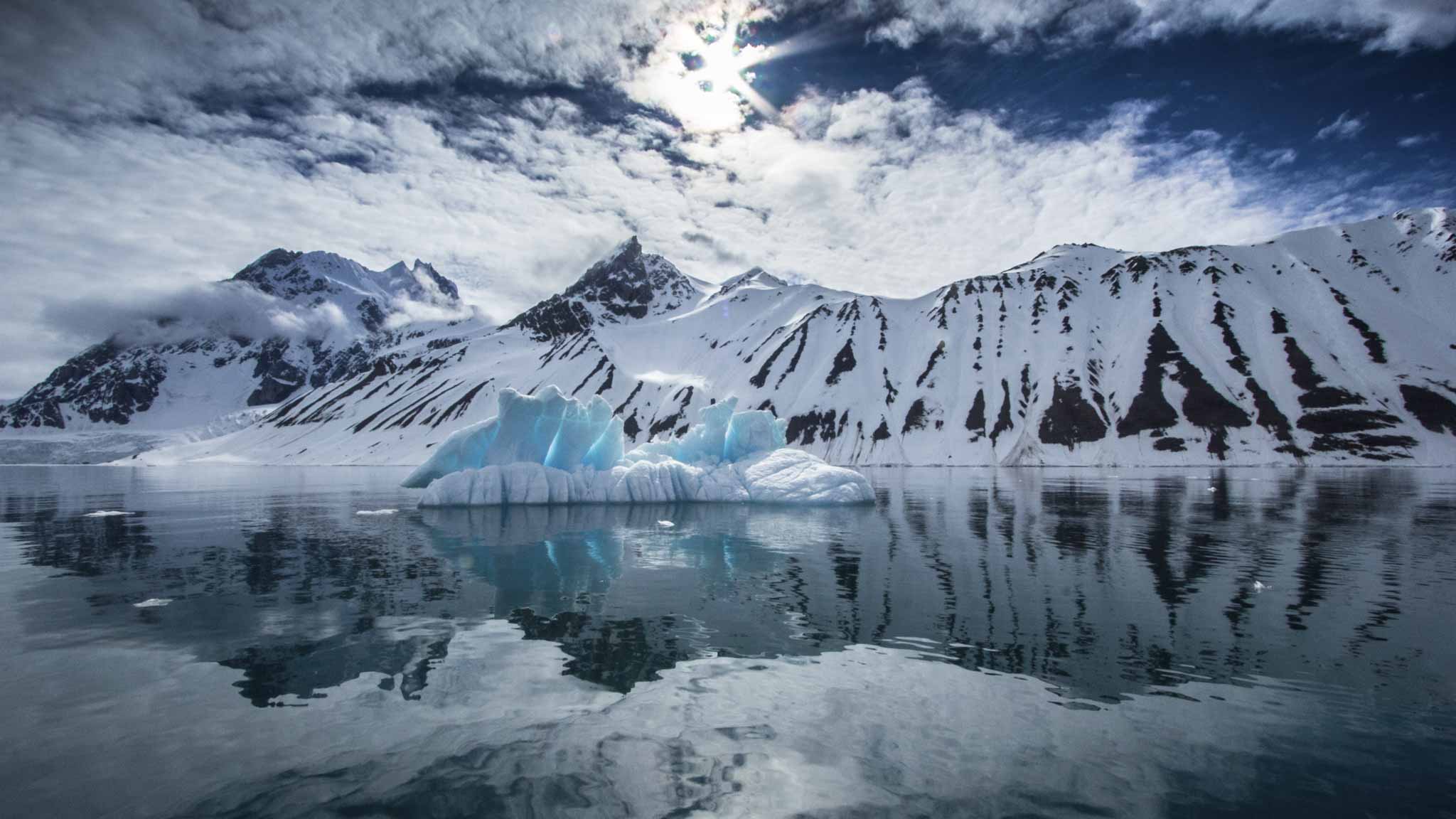
Our world is home to a vast array of species and landscapes that communicate with each other, almost like a one big, living organism.
In this bountiful tapestry, everything is connected.
We already know by now that the world depends on the cycles and exchanges that happen between the tiniest organisms like phytoplankton to large mammals like the blue whale.
Take a look at the world outside your window and notice that there are millions of processes happening every second that keep our planet working and functioning. I won’t use the word thriving now because we have come to a point where the world is fighting for survival.
Two of our biggest fighters and protectors are the deep seas and the Arctic.
So lets dive into the wonderful world of frozen seas and enchanting, unexplored depths.
The deep blue
The deep seas account for the surface beneath 200 metres of depth. In that regard this marine environment takes up 98% of the entire oceans volume and covers more than half of the world.
It holds the richest biome in the world (community of plants and animals living in a specific climate) and yet most of it is unexplored and unknown to science.
The most wonderful thing about the deep sea is that it is the largest carbon sink in the world. This means that it stores 50 times more carbon than the atmosphere.

What is so special about it being a carbon sink?
Deep ocean is considered the heart of the earth’s climate. By storing carbon from the surface it acts as a buffer and a warming regulator keeping the temperatures at a balance. Just to imagine the scope of this function, since the Industrial Revolution, the deep ocean has stored a full 30 % of human produced carbon. That is 50 times more that the atmosphere.
Another important role of the marine environment below 200 metres is the thermohaline circulation, a process that regulates Earth’s heat distribution from the equator to the poles.
Thermohaline circulation is a deep sea current system that is based on temperature and salinity of the water. It is also called “ocean conveyor belt” and it works like this:
“The colder, higher salinity waters sink to the deep ocean and move horizontally through the depths while surface waters move in to replace the sinking water. This creates a global current system, driving the movement of water around the ocean, mixing warm higher salinity waters from the surface with deep waters which are cooler and less saline”, quote from NASA.
Threats and efforts to protect the deep ocean
Even though it is a treasure trove of unexplored beauty, the deep ocean is also very vulnerable.
Marine pollution, bottom trawling and deep sea mining have influenced the stability of the depth and in that way threaten the entire global ecosystem.
The latest COP summit in Brazil has yielded some results in this area by highlighting the destructive force of deep sea mining and joining in effort through the BBNJ agreement to protect the deep ocean from bottom trawling as well.
BBNJ agreement, Agreement on Marine Biological Diversity of Areas beyond National Jurisdiction has finally been ratified and will be implemented starting January 2026, now. This agreement is important for the direction of climate policies towards places like deep oceans and the Arctic.
There is positive movement in this area, but the world has come to a point where changes must be implemented quickly in order to save what we can.
Light at the end of the tunnel
We come at last to the deep North, a place of frozen landscapes and life giving seas, the Arctic.
This area and the deep ocean hold much in common. They are freezing cold, dark and home to a bustling wildlife that is the heart of the entire global climate.
The Arctic is called the “refrigerator” of the world because it reflects the suns light back into space using the albedo effect. This effect comes from the shining white colour of the surface of the ice that reflects the light of the sun back into space and thus regulating the Earth’s temperature.
And even though the tunnel is long, dark and narrow there is still hope for our world.

Challenges and threats to the Arctic
As climate change brings rise in temperatures, the Arctic is heating up three times faster than the rest of the planet. This means that the ice and permafrost are in danger of melting, thus brining a rise in sea levels and destruction of habitat for species like the polar bear.
The melting of sea ice threatens not only polar bears, but phytoplankton, seals and whales. The Arctic distributes heat around our planet, if this function were to be disrupted it could lead to catastrophic consequences for the entire world.
Also as the ice melts it brings an influx of freshwater into the ocean potentially messing with the thermohaline circulation.
The BBNJ agreement from the COP30 in Brazil will hopefully work fast in slowing down the warming of the Arctic, considering the indigenous communities and the Arctic Council.
Good news is that Norway stopped the petition for deep sea mining, and scientists are vocal about the damage it can do to the marine ecosystem.
The Arctic Council is a intergovernmental forum that consist of 8 member states of the Arctic Circle and representatives of indigenous communities.
The work of protecting deep seas and the Arctic has never been more urgent and hopefully the BBNJ agreement has given way to bold, decisive action from world’s policy makers.
An Article by Anamarija Kolimbatovic